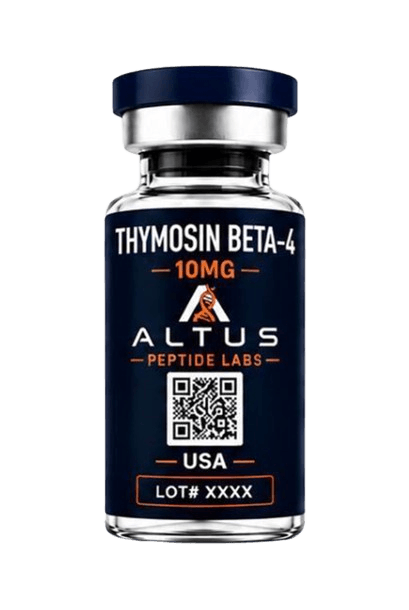
THYMOSIN BETA-4
$100.00
Thymosin Beta-4 (Tβ4) is a naturally occurring 43-amino-acid peptide that has received considerable attention in cell biology and molecular research. Known for its role in actin regulation, this peptide offers researchers an interesting model for studying cytoskeletal organization, intracellular dynamics, and cellular signaling mechanisms.
Unlike receptor-targeting compounds that draw attention through specific pharmacological activity, researchers often study Thymosin Beta-4 for its interactions with actin and other cellular processes. Its molecular characteristics make it relevant to laboratories examining protein interactions, cell structure, and the mechanisms governing cellular behavior.
This research material is intended for scientific investigation and analytical applications. Researchers should review the available product specifications and batch documentation before selecting it for a laboratory workflow.
Research use only. Not for human or veterinary use.
Thymosin Beta-4 Product Specifications
The exact product quantity, purity, and formulation should be confirmed through the supplier’s current documentation.
| Specification | Details |
| Compound | Thymosin Beta-4 (Tβ4) |
| Peptide Length | 43 amino acids |
| Classification | Naturally occurring peptide |
| Primary Research Focus | Actin regulation and cellular biology |
| Form | Confirm product documentation |
| Quantity | Verify available vial size |
| Purity | Confirm batch-specific analysis |
| Intended Use | Laboratory research only |
The molecular characteristics above describe Thymosin Beta-4 as a research subject. Product-specific analytical information should always be verified independently.
Molecular Structure and Actin-Binding Research
One of the defining characteristics of Thymosin Beta-4 is its relationship with actin, a structural protein involved in the organization and movement of cells.
Thymosin Beta-4 is known to bind monomeric G-actin, contributing to research interest in the regulation of actin availability and cytoskeletal dynamics. This interaction provides a foundation for investigating how cellular components respond to changing structural and signaling requirements.
Actin participates in a wide range of cellular processes, including the formation of structural networks and the organization of intracellular components. Because of this, researchers study actin-associated proteins to better understand the molecular mechanisms involved in cell architecture.
Thymosin Beta-4 offers a specific peptide model for examining these interactions through biochemical and cellular research methods.
Research Applications in Cellular Biology
Thymosin Beta-4 has been studied across several areas of biological research. Its potential relevance depends on the experimental model and the particular mechanisms being investigated.
Actin Dynamics and Cytoskeletal Organization
Researchers can examine the relationship between Thymosin Beta-4 and actin regulation. These investigations may help characterize protein interactions and the molecular factors associated with cytoskeletal organization.
Protein-Protein Interaction Studies
Thymosin Beta-4 provides a research subject for exploring peptide-protein binding and the structural characteristics that influence molecular interactions.
Cellular Signaling Research
Studies may investigate the relationship between actin-associated processes and broader intracellular signaling networks. These experiments require appropriate controls and carefully selected cellular models.
Peptide Characterization
Laboratories can examine the peptide’s molecular identity, sequence, purity, and other analytical characteristics using validated laboratory methods.
Comparative Research
Thymosin Beta-4 may be evaluated alongside other peptides or actin-associated research materials to investigate differences in molecular structure and biological interactions.
These applications describe potential research directions rather than guaranteed experimental outcomes.
What Makes Thymosin Beta-4 Interesting to Researchers?
Thymosin Beta-4 is particularly relevant to researchers interested in the relationship between peptide structure and cellular function. Its relatively short amino acid sequence and established association with actin provide a defined molecular system for laboratory investigation.
Researchers may explore questions such as:
- How does Thymosin Beta-4 interact with G-actin?
- Which molecular characteristics influence peptide-protein binding?
- How do actin-associated interactions relate to cellular organization?
- What analytical methods can confirm peptide identity and purity?
Answering these questions requires experimental evidence from appropriate research systems. Results may vary depending on assay design, sample quality, and laboratory conditions.
The distinction between established molecular interactions and broader biological interpretations is important when evaluating research findings.
Analytical Quality and Documentation
High-quality research materials should come with clear identification and relevant analytical information. Before using Thymosin Beta-4, laboratories should examine the supplier’s available documentation and determine whether it supports their intended research objectives.
Important information may include:
- Peptide identity and sequence
- Batch or lot number
- Purity analysis
- Formulation details
- Storage recommendations
Analytical methods should be appropriate for the peptide’s characteristics. Researchers should confirm any stated purity percentage through current batch documentation rather than relying on assumed specifications.
Clear records can help laboratories maintain consistency when comparing samples or repeating experimental procedures.
Storage and Handling Considerations
The appropriate storage conditions for Thymosin Beta-4 depend on its formulation, packaging, and validated stability information.
Researchers should follow the supplier’s specific handling instructions and review the documentation provided with the product. Storage requirements for lyophilized peptide materials may differ from those of prepared solutions.
Do not assume storage temperatures, reconstitution procedures, or stability periods without verified product-specific guidance.
Frequently Asked Questions
1. What is Thymosin Beta-4?
Thymosin Beta-4 is a naturally occurring 43-amino-acid peptide studied for its association with actin regulation and cellular biology.
2. What is Thymosin Beta-4 researched for?
Research commonly examines actin binding, cytoskeletal dynamics, protein interactions, and cellular signaling mechanisms.
3. How long is Thymosin Beta-4?
Thymosin Beta-4 consists of 43 amino acids.
4. Is Thymosin Beta-4 the same as Follistatin-344?
No. They are different biological materials with distinct molecular structures and research profiles.
5. Is this product intended for human use?
No. This product is intended for laboratory research only and is not for human or veterinary use.
Explore Thymosin Beta-4 Research Material
Thymosin Beta-4 provides researchers with a defined peptide model for investigating actin-associated interactions and cellular mechanisms. Its molecular characteristics make it relevant to studies in protein biochemistry, cytoskeletal organization, and peptide characterization.
Review the available specifications and analytical documentation to determine whether the material aligns with your laboratory’s research requirements.
Research use only. Not for human or veterinary use.
Reviews
There are no reviews yet.