
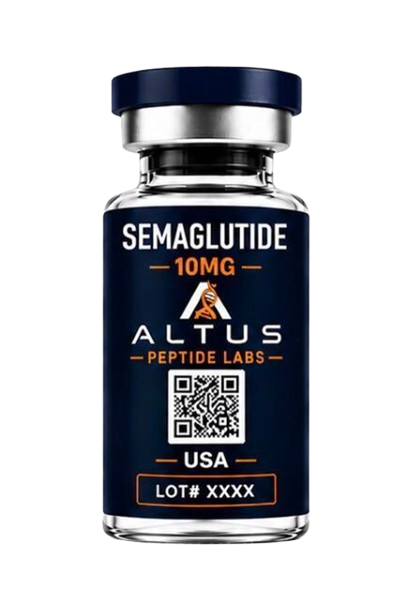
SEMAGLUTIDE
Price range: $60.00 through $300.00
Semaglutide is a synthetic peptide and long-acting glucagon-like peptide-1 (GLP-1) receptor agonist widely studied in metabolic research. Its distinctive molecular structure and receptor activity make it a valuable compound for investigating GLP-1 signaling, glucose-regulated pathways, and related physiological mechanisms in laboratory settings.
Designed for research applications, this semaglutide offering provides researchers with a compound of interest for controlled experimental studies. Its established pharmacological profile supports investigations into receptor activation, intracellular signaling, and the broader biology of incretin-related pathways.
Research use only. Not for human or veterinary use.
Semaglutide Specifications
| Specification | Details |
| Compound | Semaglutide |
| Classification | GLP-1 receptor agonist |
| Type | Synthetic peptide |
| Research focus | GLP-1 signaling and metabolic pathways |
| Form | Verify available product format |
| Quantity | Select available option |
| Purity | Confirm current batch documentation |
| Intended use | In vitro laboratory research |
Confirm the product’s exact purity, vial size, and analytical documentation before publishing the final product specifications.
Understanding Semaglutide and GLP-1 Receptor Activity
Semaglutide belongs to a class of compounds that interact with the glucagon-like peptide-1 receptor. Researchers study this receptor because it participates in signaling networks associated with glucose regulation, pancreatic function, and metabolic physiology.
At the molecular level, semaglutide features a modified peptide structure designed to support sustained receptor activity. Its structural characteristics include modifications that influence enzymatic stability and albumin binding. These features distinguish semaglutide from native GLP-1 and make it relevant to investigations of peptide-receptor interactions.
Laboratory research may examine these mechanisms through controlled receptor-binding experiments, cell-based assays, and comparative peptide studies.
Potential Research Applications
Semaglutide supports scientific investigations into several areas of molecular and metabolic biology, including:
- GLP-1 receptor signaling: Study receptor activation and downstream cellular responses.
- Incretin pathway research: Investigate signaling mechanisms associated with GLP-1 activity.
- Peptide structure-function studies: Examine how molecular modifications influence receptor interactions.
- Comparative pharmacology: Evaluate semaglutide alongside other GLP-1 receptor agonists.
- Metabolic research models: Explore pathways connected to glucose-regulated cellular processes.
Research outcomes depend on the experimental design, model system, and analytical methods used.
Why Choose Semaglutide for Laboratory Research?
A well-characterized research compound can help laboratories maintain consistency across experimental workflows. Semaglutide offers an established molecular identity and a documented connection to GLP-1 receptor pharmacology.
Researchers evaluating this material should consider the information provided with each batch, including identity confirmation, purity analysis, and relevant documentation.
Key considerations:
- Defined compound identity
- Relevant receptor pharmacology
- Suitability for planned laboratory methods
- Batch-specific analytical documentation
- Research-use-only positioning
Product-specific quality claims should reflect the supplier’s actual testing records rather than assumed purity levels.
Quality, Handling, and Documentation
Reliable research materials require clear identification and appropriate handling. Before beginning an experiment, researchers should review the supplied documentation and confirm that the material matches their intended analytical requirements.
Storage conditions, stability information, and handling instructions should follow the supplier’s validated recommendations. These details may vary according to formulation, packaging, and material specifications.
For semaglutide research, laboratories should distinguish between a research material and an approved pharmaceutical product. This listing is intended for laboratory research and does not provide instructions for human administration.
Frequently Asked Questions
1. What is semaglutide?
Semaglutide is a synthetic peptide and GLP-1 receptor agonist studied in receptor signaling and metabolic research.
2. What is semaglutide used for in research?
Researchers investigate its molecular interactions, GLP-1 receptor activity, and related cellular signaling pathways.
3. Is semaglutide intended for human use?
This research listing is intended for laboratory research only. It is not for human or veterinary use.
4. What is the molecular weight of semaglutide?
The commonly reported molecular weight is approximately 4,113.58 g/mol, with the molecular formula C₁₈₇H₂₉₁N₄₅O₅₉.
5. What documentation should researchers review?
Review the product’s available identity, purity, batch, and handling documentation before use.
Explore Semaglutide Research Material
Semaglutide provides a defined molecular target for laboratory investigations involving GLP-1 receptor pharmacology and peptide research. Review the available specifications and supporting documentation to determine whether this material aligns with your research requirements.
Explore the product details and select the appropriate research specification for your laboratory workflow.
Research use only. Not for human or veterinary use.
| MG Option | 10mg, 20mg, 30mg, 50mg, 5mg |
|---|
Related products
-
GLP-1 & Metabolic
SS-31
Price range: $50.00 through $75.00 Select options This product has multiple variants. The options may be chosen on the product page
Reviews
There are no reviews yet.