
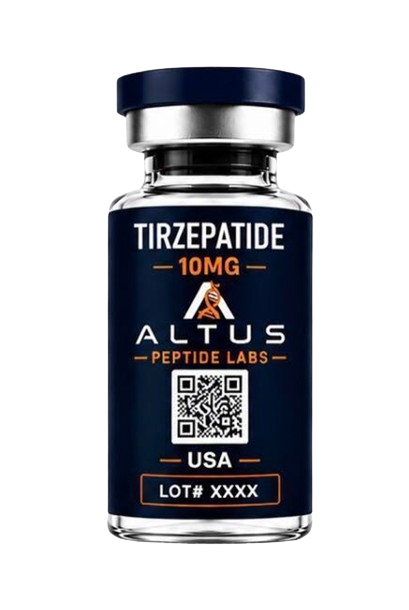
TIRZEPATIDE
Price range: $70.00 through $428.00
Tirzepatide is a synthetic peptide that has attracted significant scientific interest for its activity at two important metabolic receptors: glucose-dependent insulinotropic polypeptide (GIP) and glucagon-like peptide-1 (GLP-1). Unlike compounds designed to target a single incretin receptor, tirzepatide provides researchers with a molecular system for examining dual-receptor pharmacology and the interconnected signaling pathways involved in metabolic regulation.
For laboratories studying peptide structure, receptor interactions, and cellular responses, tirzepatide offers an established research subject with a distinctive molecular profile. Its dual-target activity makes it particularly relevant to comparative investigations into incretin biology and receptor-mediated signaling.
This product is intended for controlled laboratory research and analytical applications. It is not intended for human or veterinary use.
Tirzepatide Research Specifications
The following product details should be verified against the current batch documentation before publication.
| Specification | Details |
| Compound | Tirzepatide |
| Classification | Dual GIP and GLP-1 receptor agonist |
| Type | Synthetic peptide |
| Molecular formula | C₂₂₅H₃₄₈N₄₈O₆₈ |
| Molecular weight | Approximately 4813.45 g/mol |
| Research focus | Incretin receptor signaling and metabolic pathways |
| Form | Confirm available formulation |
| Quantity | Select available vial size |
| Purity | Confirm batch-specific analysis |
| Intended use | Laboratory research only |
Tirzepatide’s precise analytical characteristics should be confirmed using the supplier’s current certificate of analysis and product documentation.
What Makes Tirzepatide Distinctive?
Tirzepatide combines activity at the GIP and GLP-1 receptors, creating a useful research model for examining how multiple incretin pathways interact. Both receptors belong to the G protein-coupled receptor (GPCR) family and participate in complex cellular signaling networks.
Researchers can investigate how receptor activation influences intracellular messenger systems, including cyclic adenosine monophosphate (cAMP). These pathways provide opportunities to study receptor responsiveness, signaling intensity, and differences between single- and dual-receptor agonists.
Tirzepatide also incorporates structural modifications that influence its pharmacokinetic characteristics. Its peptide design includes a fatty-acid component that supports albumin binding, making it relevant to research into peptide stability and receptor activity over extended experimental periods.
The specific response depends on the experimental model, receptor expression, assay conditions, and analytical methodology.
Molecular Structure and Pharmacological Research
Tirzepatide’s molecular structure is an important part of its research identity. It is a modified peptide engineered to interact with both GIP and GLP-1 receptors.
This dual-receptor profile allows scientists to examine questions such as:
- How do GIP and GLP-1 receptor pathways differ?
- What signaling responses occur when both receptor systems are targeted?
- How do structural modifications influence peptide-receptor interactions?
- How does tirzepatide compare with single-receptor agonists in laboratory assays?
These questions can support research in molecular pharmacology, peptide characterization, and receptor signaling.
Rather than focusing on consumer-oriented outcomes, laboratory investigations can use tirzepatide to explore the underlying biological mechanisms that make incretin receptors important research targets.
Key Research Applications
Tirzepatide may be relevant to several laboratory research areas, depending on the study design and validated experimental methods.
Dual-Receptor Signaling Studies
Investigate the interaction between GIP and GLP-1 receptor pathways using appropriate cellular or biochemical assay systems.
Comparative Peptide Pharmacology
Compare tirzepatide with other incretin-related research compounds to evaluate differences in receptor activity, molecular structure, and signaling responses.
Peptide Characterization
Study the compound’s identity, molecular characteristics, and analytical profile through suitable laboratory techniques.
Cellular Metabolic Research
Explore receptor-mediated signaling mechanisms associated with incretin biology and metabolic regulation in controlled research models.
Research applications should be determined by the laboratory’s objectives and the methods validated for the selected material.
Analytical Quality and Batch Documentation
Research-grade materials require accurate identification and transparent documentation. When evaluating tirzepatide for laboratory use, researchers should review the available batch information and confirm whether it meets their experimental requirements.
Relevant documentation may include:
- Compound identity verification
- Purity analysis
- Batch identification
- Molecular characterization
- Storage and handling recommendations
Testing methods should be clearly identified where applicable. For example, laboratories may use chromatographic or mass spectrometric techniques to assess specific analytical characteristics.
Do not assume a purity percentage or testing outcome without supporting batch documentation. Product claims should reflect the supplier’s verified analytical records.
Storage and Laboratory Handling
Appropriate storage helps researchers maintain the integrity of laboratory materials. Tirzepatide should be handled according to the supplier’s validated storage instructions and the characteristics of its specific formulation.
Storage requirements may differ depending on whether the material is supplied as a lyophilized powder or another formulation. Researchers should consult the product documentation for temperature recommendations, protection from environmental exposure, and handling precautions.
Avoid introducing storage or reconstitution instructions that have not been validated for the specific product.
Frequently Asked Questions
1. What is tirzepatide?
Tirzepatide is a synthetic peptide that acts at both GIP and GLP-1 receptors. Researchers study its dual-receptor pharmacology and related cellular signaling mechanisms.
2. What makes tirzepatide different from single-receptor agonists?
Tirzepatide is designed to interact with two incretin receptors rather than focusing on GLP-1 receptor activity alone. This makes it relevant to dual-receptor research.
3. What research areas involve tirzepatide?
Research applications include receptor pharmacology, incretin signaling, peptide characterization, and comparative cellular studies.
4. What is the molecular weight of tirzepatide?
The commonly reported molecular weight is approximately 4813.45 g/mol. Researchers should confirm the relevant molecular information for their analytical application.
5. Is this product intended for human use?
No. This product description is intended for laboratory research and analytical applications only. It is not for human or veterinary use.
Select Tirzepatide for Your Research
Tirzepatide provides researchers with a distinct molecular framework for investigating dual incretin receptor activity. Its structural characteristics and GIP/GLP-1 receptor profile make it relevant to a range of laboratory studies.
Review the available product specifications, batch documentation, and research-use requirements before selecting the material for your laboratory workflow.
Research use only. Not for human or veterinary use
| MG Option | 100mg, 10mg, 20mg, 30mg, 60mg |
|---|


Reviews
There are no reviews yet.