
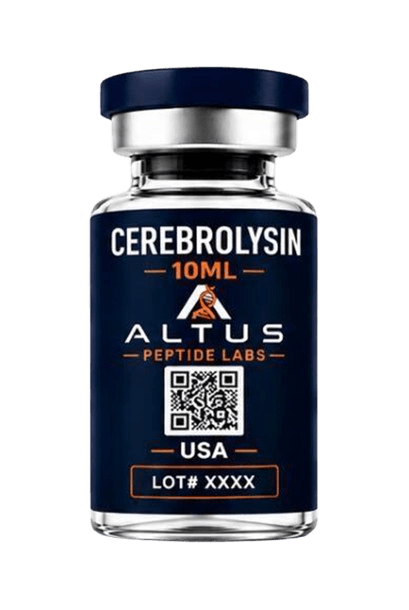
CEREBROLYSIN
$50.00
Cerebrolysin is a peptide-based preparation derived from porcine brain proteins and is widely discussed in the context of neurological research. Unlike defined synthetic peptides such as Pinealon or Ipamorelin, Cerebrolysin consists of a mixture of low-molecular-weight peptides and amino acids. This composition gives it a distinctive research profile, particularly for laboratories examining complex biological interactions rather than a single, isolated peptide sequence.
Its scientific interest centers on neurotrophic signaling, neuronal function, and mechanisms associated with cellular responses in the nervous system. Researchers studying peptide preparations may investigate how complex mixtures interact with experimental models and how their molecular characteristics relate to observed biological activity.
For laboratories evaluating Cerebrolysin, accurate characterization is especially important. Because it is a multi-component preparation, researchers should review the supplier’s formulation, analytical documentation, and intended research application before selecting the material.
Research use only. Not for human or veterinary use.
Cerebrolysin Research Specifications
Cerebrolysin’s exact composition and analytical characteristics depend on the preparation being evaluated. The following information provides general scientific context rather than unverified product-specific claims.
| Specification | Details |
| Product Name | Cerebrolysin |
| Classification | Peptide-based preparation |
| Source | Porcine brain-derived proteins |
| Composition | Low-molecular-weight peptides and amino acids |
| Research Focus | Neurobiology and cellular signaling |
| Molecular Identity | Complex mixture; verify documentation |
| Form | Confirm supplier specifications |
| Quantity | Verify available product size |
| Purity | Confirm batch-specific analysis |
| Intended Use | Laboratory research only |
Unlike a single synthetic peptide, Cerebrolysin should not be represented through one amino acid sequence or molecular weight alone. Its composition requires product-specific documentation.
Understanding Cerebrolysin’s Molecular Composition
Cerebrolysin is characterized as a preparation containing low-molecular-weight peptides and amino acids generated through the processing of porcine brain proteins. This distinguishes it from chemically synthesized research peptides with defined sequences and molecular structures.
In experimental neuroscience, complex peptide preparations can raise questions about the relationship between multiple molecular components and biological signaling pathways. Researchers may examine the composition of the preparation, the characteristics of its constituent molecules, and the reproducibility of analytical findings.
A clear distinction between composition, proposed mechanism, and experimentally demonstrated activity is essential when describing Cerebrolysin. The presence of neuropeptides or amino acids does not independently establish a specific biological outcome.
Laboratories should therefore rely on validated documentation and published evidence relevant to the precise preparation under investigation.
Neurobiology and Neurotrophic Signaling Research
Neurotrophic signaling involves molecular pathways that influence neuronal development, maintenance, and cellular responses. Cerebrolysin has been discussed in research examining these mechanisms, although the preparation’s complex composition makes it different from a single-target experimental compound.
Researchers may investigate neurotrophic-related pathways through cellular models, biochemical assays, and other experimental systems designed to examine molecular responses.
Potential areas of investigation include:
- Neuronal signaling mechanisms
- Peptide composition and characterization
- Cellular response pathways
- Protein-derived molecular interactions
- Comparative analysis of complex peptide preparations
The relevance of each area depends on the experimental design and the evidence supporting the particular research question.
Research Applications of Cerebrolysin
1. Peptide Preparation Characterization
Cerebrolysin can be examined through analytical approaches designed to characterize complex mixtures. Researchers may assess molecular composition, consistency, and relevant quality attributes.
Because the preparation contains multiple components, analytical characterization should be appropriate for mixtures rather than relying exclusively on methods intended for a single purified peptide.
2. Experimental Neuroscience
Laboratories investigating neuronal biology may use suitable experimental systems to examine cellular responses associated with peptide-based preparations.
Such research requires carefully selected models and controls to distinguish preparation-specific effects from broader cellular responses.
3. Neurotrophic Mechanism Investigations
Published research has explored Cerebrolysin in relation to neurotrophic signaling. Researchers interested in these mechanisms should evaluate the strength, limitations, and applicability of the available evidence.
Findings from preclinical studies should not automatically be interpreted as evidence of clinical effectiveness.
4. Comparative Molecular Research
Cerebrolysin may be considered in comparative studies involving other peptide preparations or neurobiology-related research materials.
However, differences in composition, molecular size, and preparation methods can influence the interpretation of comparative results.
Quality Control and Analytical Documentation
When working with complex biological preparations, reliable documentation is essential. Cerebrolysin’s multi-component nature means that researchers should carefully evaluate the information supplied for the specific product and batch.
Important documentation may include:
- Source and preparation information
- Batch or lot identification
- Composition details
- Analytical testing methods
- Purity or quality attributes
- Storage recommendations
The term “research grade” alone does not establish a preparation’s complete molecular identity or suitability for a particular experiment. Researchers should review the available analytical evidence and determine whether it supports their intended laboratory application.
Avoid assigning a single purity percentage to Cerebrolysin without product-specific supporting documentation.
Storage and Laboratory Handling
Cerebrolysin’s storage requirements depend on its formulation, packaging, and validated stability information. Researchers should follow the supplier’s instructions for the exact preparation being evaluated.
Handling procedures should be based on documented product characteristics rather than assumptions drawn from synthetic peptides or unrelated protein materials.
Before beginning research, laboratories should confirm storage conditions, preparation requirements, and any applicable stability information.
Cerebrolysin Compared with Defined Synthetic Peptides
One important distinction is the difference between Cerebrolysin and chemically defined peptides.
| Feature | Cerebrolysin | Synthetic Peptide |
| Composition | Multi-component preparation | Defined molecular sequence |
| Source | Porcine brain-derived proteins | Chemical or biological synthesis |
| Characterization | Mixture-specific analysis | Sequence and identity analysis |
| Research Approach | Complex preparation studies | Defined molecular investigations |
This comparison helps researchers understand why Cerebrolysin requires a different documentation and analytical approach from compounds such as Pinealon or Thymosin Beta-4.
Frequently Asked Questions
1. What is Cerebrolysin?
Cerebrolysin is a peptide-based preparation derived from porcine brain proteins and containing low-molecular-weight peptides and amino acids.
2. Is Cerebrolysin a single peptide?
No. Cerebrolysin is a complex preparation rather than one isolated peptide with a single amino acid sequence.
3. What research areas involve Cerebrolysin?
Research may examine neurobiology, peptide composition, cellular signaling, and neurotrophic-related mechanisms.
4. Is Cerebrolysin the same as Pinealon?
No. Pinealon is a defined short synthetic peptide, while Cerebrolysin is a multi-component preparation with a different molecular composition.
5. How should Cerebrolysin be evaluated for research?
Researchers should review the exact formulation, analytical documentation, batch information, and validated handling requirements.
6. Is Cerebrolysin intended for human use?
No. This product description is intended for laboratory research only and is not for human or veterinary use.
Explore Cerebrolysin Research Material
Cerebrolysin offers a distinct research subject for laboratories investigating complex peptide preparations and neuroscience-related molecular mechanisms. Its multi-component composition makes accurate documentation and preparation-specific characterization particularly important.
Research use only. Not for human or veterinary use.
Related products
-
GLP-1 & Metabolic
TESAMORELIN
$105.00 Select options This product has multiple variants. The options may be chosen on the product page
Reviews
There are no reviews yet.