FOLLISTATIN-344
$45.00
Follistatin-344 is a protein research material associated with the regulation of signaling molecules within the transforming growth factor-beta (TGF-β) superfamily. Its interactions with activins and related ligands have made follistatin a subject of interest in molecular biology, protein biochemistry, and cellular signaling research.
For laboratories investigating extracellular protein interactions, ligand-binding mechanisms, and regulatory pathways, Follistatin-344 offers a specific molecular target for experimental study. Its identity within the follistatin family also makes it relevant to research examining how protein structure influences biological interactions.
Researchers should verify the precise formulation, purity, and analytical documentation before beginning laboratory work.
This product is intended for research purposes only. Not for human or veterinary use.
Follistatin-344 Product Specifications
| Specification | Details |
| Product Name | Follistatin-344 |
| Protein Family | Follistatin |
| Listed Quantity | 10 mg |
| Brand | Altus Peptide Labs |
| Research Focus | Protein interactions and signaling pathways |
| Form | Confirm current product documentation |
| Purity | Verify batch-specific analysis |
| Intended Use | Laboratory research only |
Understanding Follistatin-344 and Its Molecular Role
Follistatin is a secreted glycoprotein that interacts with signaling proteins, particularly activins. These proteins belong to the TGF-β superfamily, a group involved in diverse cellular processes and regulatory mechanisms.
Follistatin’s ability to bind certain ligands makes it relevant to research into extracellular signaling regulation. Rather than acting primarily as a conventional receptor agonist, follistatin is commonly studied through its interactions with signaling molecules and the resulting effects on ligand availability.
Follistatin-344 refers to a specific follistatin isoform or precursor-associated form. Researchers should distinguish between the various follistatin forms because structural differences can influence their properties, processing, and biological interactions.
This distinction is important when designing experiments involving protein binding, molecular characterization, or comparative signaling studies.
Research Applications in Protein and Cellular Biology
Follistatin-344 may be relevant to research projects examining several interconnected areas of molecular science.
Activin Binding and Ligand Regulation
Follistatin research frequently focuses on its interactions with activins. These studies can help researchers investigate protein-binding behavior and the mechanisms that influence signaling ligand availability.
Myostatin-Related Signaling
Follistatin has been studied in connection with myostatin, a member of the TGF-β superfamily. Research may examine the molecular relationship between follistatin and myostatin, including ligand-binding characteristics and signaling regulation.
The specific behavior of Follistatin-344 depends on the molecular form, experimental model, and study conditions.
Protein-Protein Interaction Studies
Laboratories can investigate the interactions between follistatin and relevant signaling proteins using suitable biochemical and analytical approaches.
These studies may help characterize binding specificity, molecular affinity, and structural relationships.
Comparative Protein Research
Follistatin-344 can serve as a subject for comparative studies involving protein isoforms, ligand-binding characteristics, and signaling-related mechanisms.
Researchers should select appropriate controls and validated analytical methods for meaningful comparisons.
Why Follistatin-344 Matters in Laboratory Research
Protein signaling research often requires a clear understanding of how individual molecules interact within a larger biological system. Follistatin provides an interesting research model because its function involves binding and regulating specific signaling ligands.
This creates opportunities to investigate questions such as:
- How does follistatin interact with activin-related proteins?
- What molecular characteristics influence ligand-binding behavior?
- How do different follistatin forms compare in experimental systems?
- What analytical methods can help characterize protein identity and purity?
These questions support fundamental research into protein biochemistry and cellular communication.
Importantly, research findings from one follistatin form should not automatically be applied to another form or formulation. Experimental conditions and molecular characteristics influence the interpretation of results.
Analytical Characterization and Quality Considerations
Reliable research materials require accurate identification and appropriate documentation. When evaluating Follistatin-344, laboratories should review the supplier’s available analytical information before incorporating the material into an experimental workflow.
Relevant quality documentation may include:
- Compound or protein identity
- Batch or lot number
- Purity analysis
- Formulation details
- Storage and handling recommendations
The exact testing methods should be confirmed through the product’s documentation. Researchers should avoid assuming a specific purity percentage or analytical result without supporting evidence.
For protein-based materials, analytical characterization may require methods suited to the molecule’s size, structure, and formulation.
Storage and Handling Guidance
The appropriate storage conditions for Follistatin-344 depend on its formulation and validated stability information.
Researchers should follow the supplier’s current recommendations for temperature, environmental protection, and handling. Storage instructions should not be inferred from unrelated peptide products because protein materials can have different stability characteristics.
Before use, review the product documentation and confirm that the selected material is suitable for the intended laboratory procedure.
Frequently Asked Questions
1. What is Follistatin-344?
Follistatin-344 is a specific follistatin-associated protein form studied in protein interaction and signaling research.
2. What is Follistatin-344 researched for?
Research may examine its interactions with activins, myostatin-related signaling proteins, and other relevant molecular pathways.
3. What quantity is shown for this product?
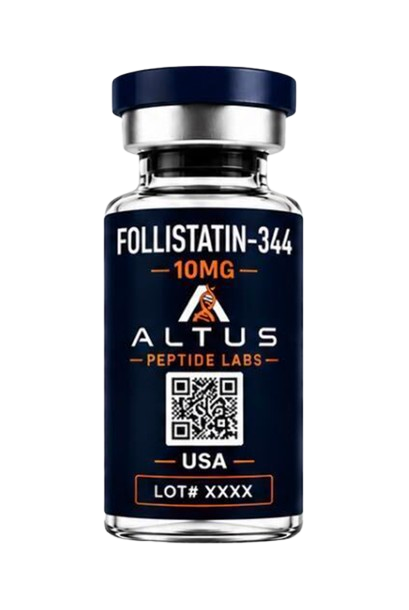
The supplied product image displays a 10 mg Follistatin-344 vial.
4. Is Follistatin-344 the same as Ipamorelin?
No. Follistatin-344 is a follistatin-associated protein, while Ipamorelin is a synthetic peptide that acts on the growth hormone secretagogue receptor.
5. Is this product intended for human use?
No. This product is intended for laboratory research only and is not for human or veterinary use.
Follistatin-344 for Research Applications
Follistatin-344 provides laboratories with a defined protein research subject for investigating ligand interactions, activin-related signaling, and molecular regulation. Its role within the follistatin family makes it relevant to studies involving protein biochemistry and cellular signaling mechanisms.
Review the product specifications, batch documentation, and handling recommendations before selecting the material for your research.
Explore Follistatin-344 and evaluate its suitability for your laboratory investigations.
Research use only. Not for human or veterinary use.
Reviews
There are no reviews yet.