NAD+
Price range: $35.00 through $100.00
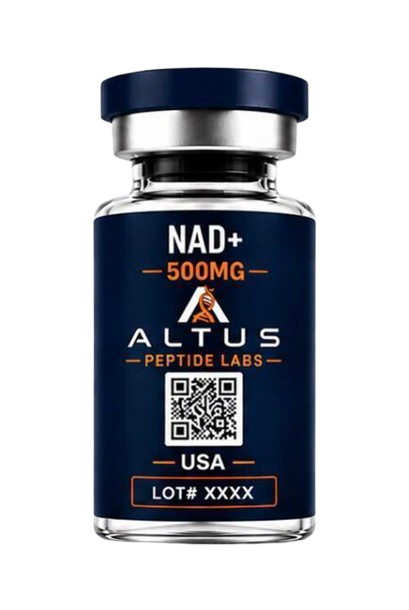
Nicotinamide Adenine Dinucleotide — essential redox coenzyme (NAD⁺/NADH cycling) 500mg research quantity for sirtuin, PARP, and CD38 pathway studies Research-grade · CAS 53-84-9 For in vitro metabolic research only
NAD+ 500mg — Nicotinamide Adenine Dinucleotide
What makes NAD+ unusual as a research compound is its dual nature. In redox reactions — glycolysis, the citric acid cycle, oxidative phosphorylation — it functions as a recyclable coenzyme, accepting and donating electrons as NAD+ and NADH. But sirtuins, PARPs, and CD38 actually consume it. They break NAD+ apart to do their work, depleting the cellular pool. This creates a resource competition at the molecular level that sits at the center of aging and metabolic research.
The three-way competition
Sirtuins (SIRT1-7) are NAD+-dependent deacylases that regulate gene expression, DNA repair, and stress responses. PARPs consume NAD+ to build poly(ADP-ribose) chains during DNA damage repair. CD38 uses NAD+ for calcium signaling through cADPR synthesis. All three enzyme families draw from the same NAD+ pool, and published research shows that pool shrinks substantially with age across multiple tissue types (Covarrubias et al., Nature Reviews Molecular Cell Biology, 2021).
The implications are significant: when PARP activates during DNA damage, it can drain enough NAD+ to starve sirtuin-mediated regulatory functions. Wang et al. examined this dynamic specifically in the context of base excision repair after ischemic stress (Stroke, 2008; PubMed 18635843).
Specifications
| Molecular Formula | C21H27N7O14P2 |
| Molecular Weight | 663.43 g/mol |
| CAS Number | 53-84-9 |
| PubChem CID | 5893 |
| Structure | Two nucleotides joined via phosphate groups — one with adenine base, one with nicotinamide |
| Form | Lyophilized powder |
| Appearance | White to off-white powder |
| Solubility | Freely soluble in water |
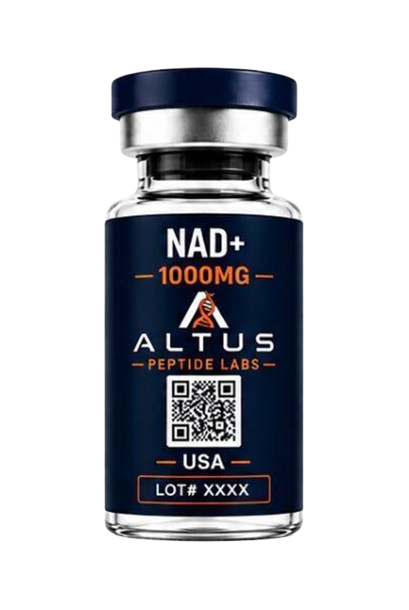
| Available Sizes | 500mg and 1000mg per vial |
Selected research
Mills et al. published one of the landmark studies in NAD+ precursor research — a 12-month NMN administration study in normal-aging mice that tracked body weight, energy metabolism, and a range of metabolic parameters over time (Cell Metabolism, 2016; PubMed 28068222). Zhang et al. examined the downstream consequences for mitochondrial and stem cell function (Cell, 2016). Imai et al. reviewed the broader NAD+ metabolism landscape comprehensively (Nat Rev Mol Cell Biol, 2024).
Research applications
- Sirtuin activity assays and NAD+-dependent deacylase research
- PARP activation and DNA damage repair studies
- Cellular bioenergetics and electron transport chain research
- Redox biochemistry — NAD+/NADH ratio quantification
- CD38 enzymatic regulation and cADPR signaling
- Mitochondrial function and oxidative phosphorylation
Quality and testing
Every Heritage Labs compound is manufactured to research-grade standards and shipped in protective packaging.
Storage
- Lyophilized: -20°C for long-term stability
- Reconstituted: 2-8°C
- Protection: Shield from light and moisture
References
- Covarrubias AJ, et al. “NAD+ metabolism and its roles in cellular processes during ageing.” Nat Rev Mol Cell Biol. 2021;22(2):119-141.
- Mills KF, et al. “Long-term administration of nicotinamide mononucleotide mitigates age-associated physiological decline in mice.” Cell Metabolism. 2016;24(6):795-806. PubMed 28068222
- Zhang R, et al. “NAD+ repletion improves mitochondrial and stem cell function.” Cell. 2016;124(3):423-436.
- Wang S, et al. “NAD+ repletion and base excision repair after ischemic stress.” Stroke. 2008;39(9):2587-2595. PubMed 18635843
- Imai S, et al. “Roles of NAD+ metabolism in cellular signaling and disease.” Nat Rev Mol Cell Biol. 2024;25:452-467.
- Rajman L, et al. “Therapeutic potential of NAD-boosting molecules.” Cell Metabolism. 2018;27(3):529-547.
For laboratory research use only. Not for human or veterinary use. Not a drug, food, or cosmetic.
| MG Option | 1000mg, 500mg |
|---|
Reviews
There are no reviews yet.